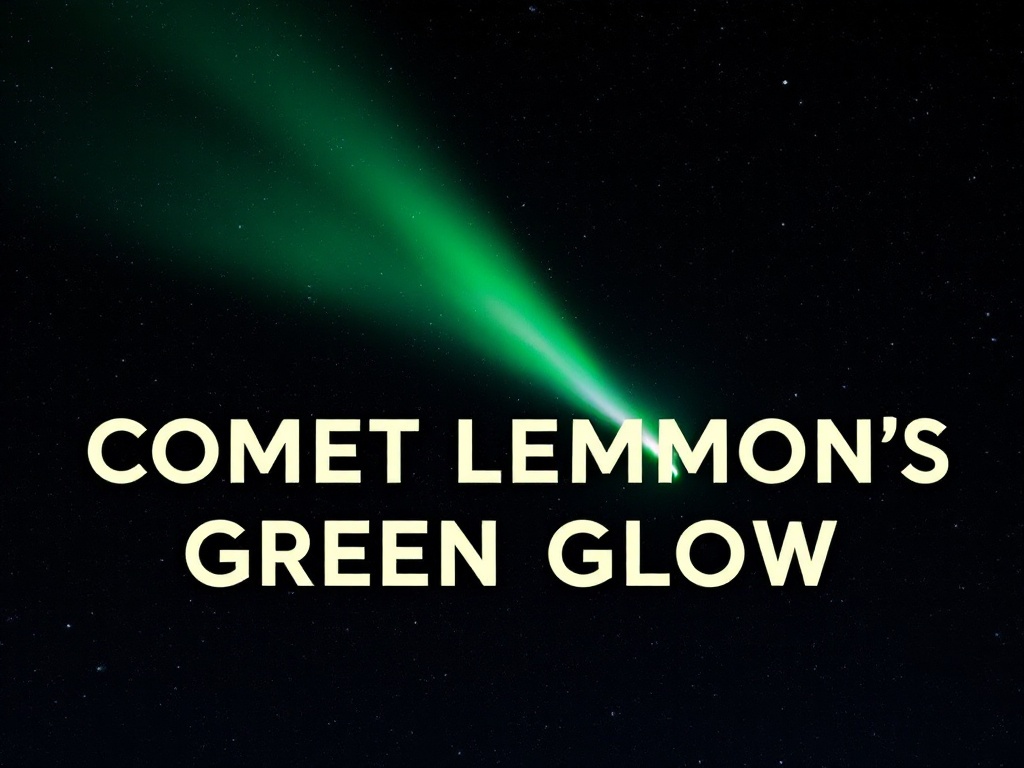
Picture this: A ghostly green streak cutting across the night sky, its eerie glow a cosmic fingerprint from deep space. That's Comet C/2025 A6 (Lemmon), a celestial marvel that will make its closest approach to Earth on October 21, 2025, coming within a staggering 56 million miles (90 million km)—closer than Mars has ever been to Earth. This isn't just another comet; it's a rare interloper with a luminous secret: its unmistakable green hue, caused by diatomic carbon in its coma. If you're a stargazer, an astronomy enthusiast, or just someone who's ever looked up at the night sky in awe, this is a moment you won't want to miss.
But here's the catch: Comet Lemmon's brilliance is as unpredictable as it is breathtaking. While some sources suggest it may be visible to the naked eye under dark skies, others argue binoculars will be essential. The stakes of visibility are high—its brightness could reach magnitude 4–5, or as low as 7.3, depending on how its coma reacts to the Sun's heat. What does that mean for you? It means now is the time to learn how to spot it, when to look, and how to ensure you don't miss this cosmic event of a lifetime.
Comet Lemmon's journey to Earth will be its most critical moment of visibility. At 0.6 astronomical units (AU)—about 89 million kilometers—it will pass just over halfway to the Moon's distance from Earth. But this isn't its closest point; that honor goes to November 8, when it will reach perihelion (its closest point to the Sun) at 0.53 AU, or roughly 79 million kilometers from Earth. This dual proximity—being close to both the Sun and Earth—creates a rare viewing window that astronomy enthusiasts can't afford to overlook.
The comet's brightness is the elephant in the room. While optimistic estimates suggest it could reach magnitudes 4–5, making it potentially visible to the naked eye under ideal conditions, conservative models predict magnitude 7.3, requiring binoculars or a telescope for confirmation. Current observations show it at magnitude 6.2–6.6, trending brighter. This means that by October 21, it could be within reach of naked-eye viewing—if the sky cooperates.
The unpredictability of comets means that even the best predictions are educated guesses. The key takeaway? Don't wait until November to look up—this comet's peak visibility is in late October, and its brightness could change rapidly.
Chart comparing brightness estimates for Comet Lemmon
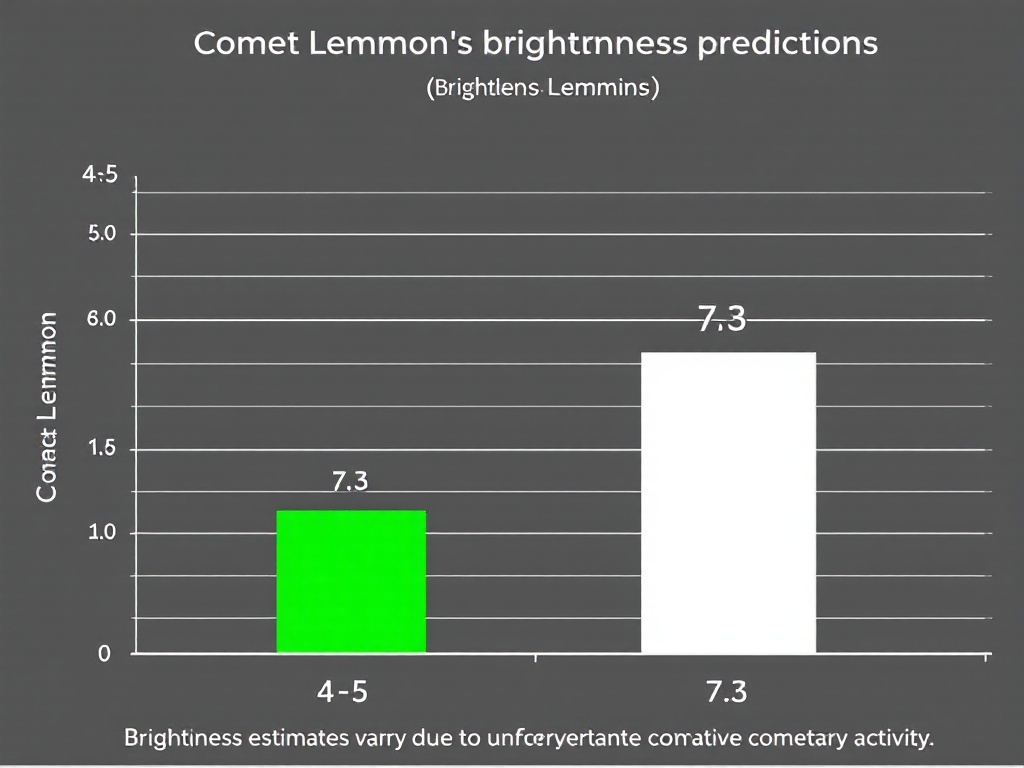
Brightness estimates vary due to unpredictable cometary activity
Comet Lemmon is a Northern Hemisphere gem, with its trajectory positioning it best for observers in the northern latitudes. From late October to early November, it will be visible pre-sunrise and post-sunset, making it a prime target for early-morning skywatchers.
However, the full moon on November 5 poses a challenge. The moon's brightness will drown out fainter objects, so the optimal time to spot Comet Lemmon is before November 5 or after November 7, when the moon's light wanes.
Comet Lemmon's green glow is its most striking feature, but it also carries a rare cosmic history. Its orbital period is estimated at 1,350 years, but gravitational interactions with Jupiter have shortened it by about 200 years—a testament to the chaotic dance of celestial bodies.
Discovered in January 2025 by the Mount Lemmon Survey, this comet has already been observed in precovery images dating back to November 2024, a phenomenon that allows astronomers to trace its path long before it became visible.

Diagram showing Comet Lemmon's trajectory and optimal viewing window
Comet Lemmon's journey is a cosmic ballet choreographed by gravity. It was first identified in January 2025, but its trajectory has been traced back to precovery images from November of the previous year. This anomaly highlights a rare phenomenon: comets can appear suddenly, yet their paths are often preordained by the gravitational tides of planets like Jupiter.
This means that we may not see Comet Lemmon again for over a millennium—a sobering reminder of how fleeting cosmic encounters can be.
Comet Lemmon's green hue is a signature of its chemical composition. The glow comes from diatomic carbon (C₂), an unusual molecule that emits a distinct green light when illuminated by the Sun. This phenomenon is rare; most comets appear faint or white, with occasional hints of green from other molecules like CN (cyanide).
Why is this significant?
Comets are notoriously unpredictable. Their brightness depends on several factors:
This makes predicting Comet Lemmon's brightness a balancing act between optimism and caution. While it may brighten significantly as it approaches Earth, its final magnitude remains a mystery until the very last days of October.
Comets are time capsules from the early solar system, preserving materials from over 4.5 billion years ago. By studying Comet Lemmon's chemical composition and trajectory, scientists can piece together clues about the formation of planets, the origins of water on Earth, and even the building blocks of life itself.
Comet Lemmon is a reminder that the universe is full of surprises. It's not just about seeing something beautiful—it's about participating in a cosmic event that may never recur in our lifetimes. Whether you spot it with your own eyes or through a telescope, this comet is a once-in-a-millennium gift.
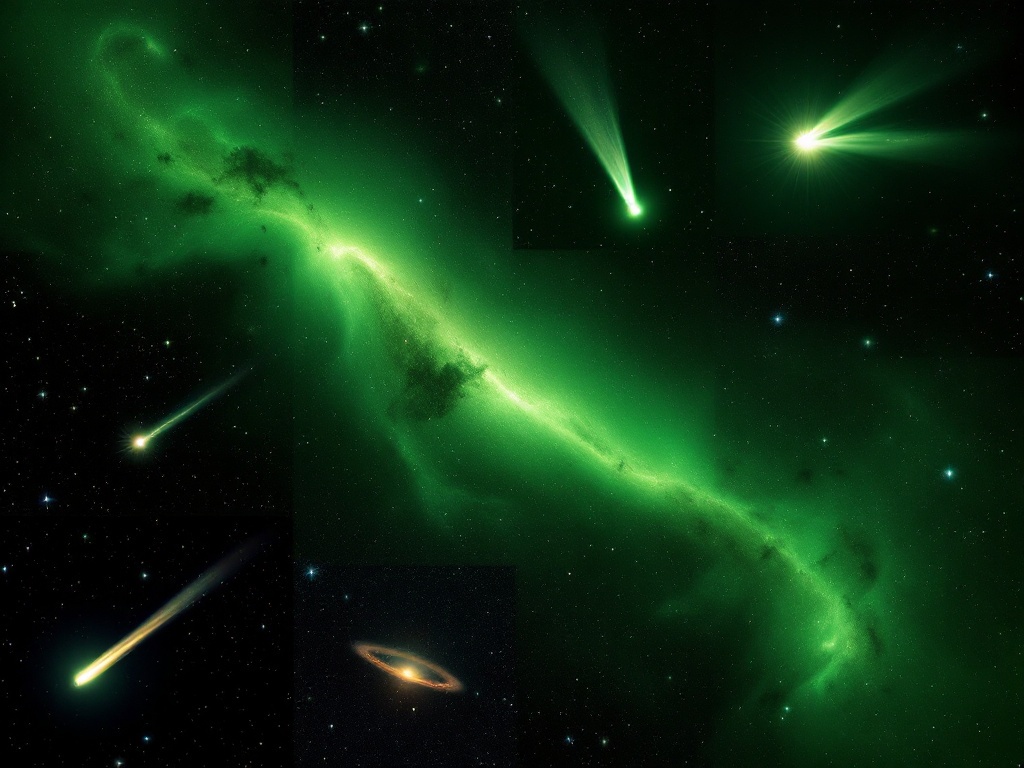
Photo collage of historical comets with green hues, including Hale-Bopp
Comet Lemmon is more than a fleeting spectacle—it's an invitation to reconnect with the cosmos. Whether it shines brightly in your sky or requires binoculars, its very existence reminds us of the vastness and wonder that lie beyond our planet.
So mark your calendars: October 21, 2025 is the day to remember. Whether you're an amateur astronomer or a curious observer, this comet offers a chance to witness something truly extraordinary.
As the poet Rumi once said: "You are not a drop in the ocean. You are the entire ocean in a drop." Comet Lemmon is that drop—a tiny, glowing fragment of the universe's vastness. Will you see it?
If this article inspired you, follow me on Medium for updates on upcoming astronomical events, space exploration breakthroughs, and tips to observe the cosmos like a pro.